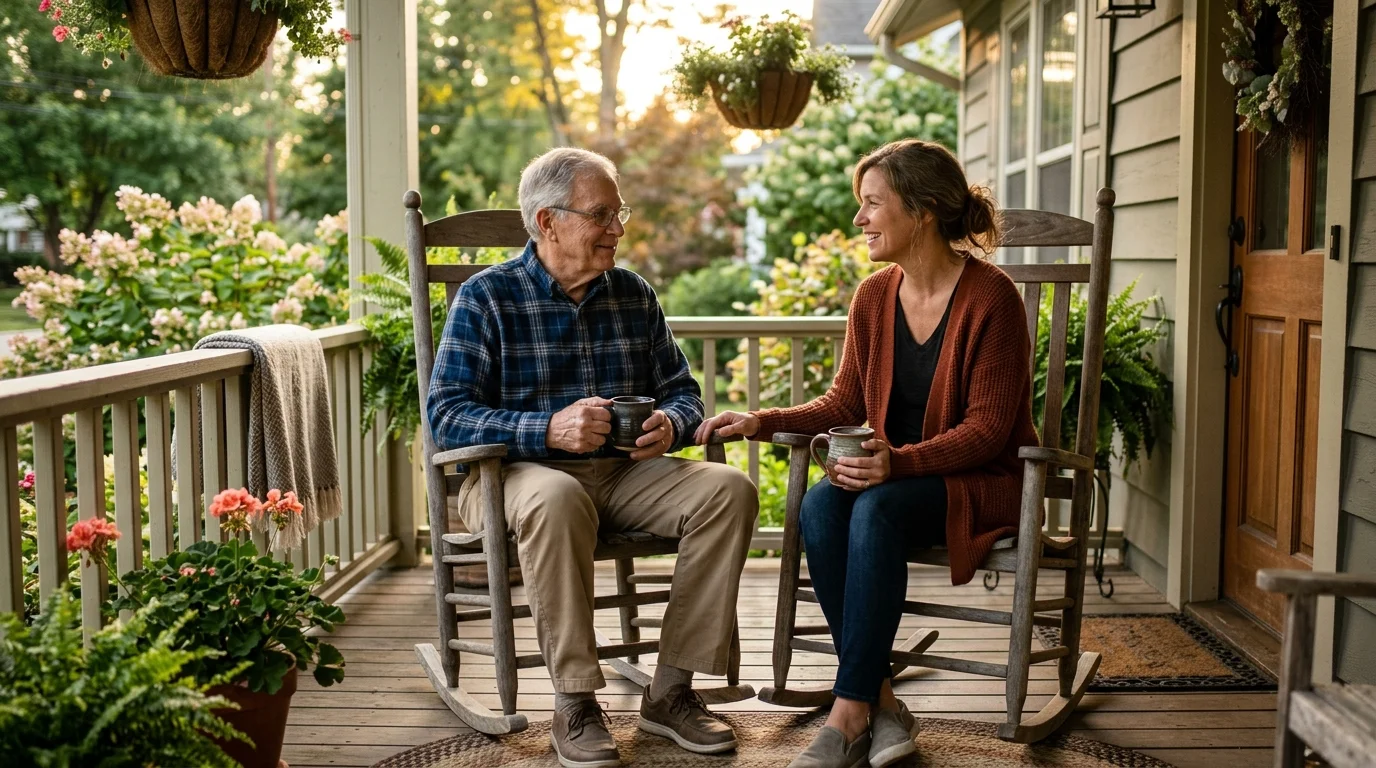
If you've ever suggested that your parent consider moving closer to family or into a maintenance-free community, you've probably heard the same response: "I'm not ready."
For many older adults, moving isn't about leaving a house. It's about leaving memories, routines, independence, and a place they've called home for years—or even decades.
And for adult children, it's one of the hardest conversations they'll ever have.
Change Is Emotional, Not Practical
Families often focus on the practical reasons to move:
- Less home maintenance
- Safer living environment
- Closer to children and grandchildren
- Fewer daily responsibilities
- More opportunities to socialize
While those reasons make logical sense, they're rarely what drives the decision.
The real challenge is emotional.
A familiar home represents comfort, identity, and a lifetime of memories. Even when a move makes practical sense, it's completely normal to resist the idea of change.
Sometimes It Takes Time: Don's Journey to Briar
For Briar resident Don, moving wasn't something he wanted to do.
After spending 25 years in Punta Gorda, Florida, he had built a life he loved. When his daughters began encouraging him to move closer to family in Ohio, he wasn't convinced.
In fact, the conversation lasted nearly two years.
His daughters patiently searched throughout Northeast Ohio looking for the right fit until they found The Cottages at Briar.
Eventually, Don agreed.
Today, he says Briar reminded him of the community he loved in Florida—comfortable homes, welcoming neighbors, and a place that simply felt right.
Sometimes the best decisions aren't made overnight. They're made when families have patience, support, and the right place to call home.
It's Okay to Start the Conversation Early
One of the biggest mistakes families make is waiting until a crisis forces a decision.
Starting the conversation early gives everyone the time and emotional breathing room to:
- Explore options without pressure
- Visit communities together casually
- Ask honest questions and express hesitations
- Think through what matters most for the future
- Make a decision on their own timeline
Moving should be about creating the next chapter—not reacting to an emergency.
Home Can Look Different
Many people worry that moving means giving up their independence.
In reality, the right community often gives people more freedom.
Less time spent mowing the lawn, shoveling snow, or maintaining a home means more time for hobbies, friendships, family visits, and simply enjoying life without household stress.
Every journey is different.
Some people move to be closer to family. Others want less maintenance. Some simply discover a community that feels like home.
Their stories remind us that moving isn't about leaving life behind—it's about making room for what's next.
Thinking About the Future?
If you're beginning the conversation with your parents—or your family has been talking about it for months or even years—know that you're not alone.
The most important step isn't making a decision today.
It's simply starting the conversation.
At Briar.Living, we're here to answer questions, provide guidance, and help families explore their options at their own pace.
For families navigating more advanced healthcare or clinical needs, Briar.Health also provides specialized respiratory, pulmonary, and ventilator care support on the same campus through Ohman Family Living's full CCRC continuum of care.
Frequently Asked Questions
How do I convince my parents to move to a senior living community?
Instead of trying to convince them, start by listening to their concerns. Give them time, involve them in the process, and visit communities together so they can make an informed decision without feeling pressured.
When is the right time to start talking about senior living?
The best time is before there's an immediate need. Early conversations allow families to explore options without the pressure of a health crisis or emergency.
What are the benefits of maintenance-free senior living?
Maintenance-free living eliminates chores like lawn care and snow removal while providing opportunities for social connections, convenience, and more time to enjoy retirement.